
Aug 29, 2026・3 min read
Invoice Financing vs Traditional Business Loans: What's the Difference?
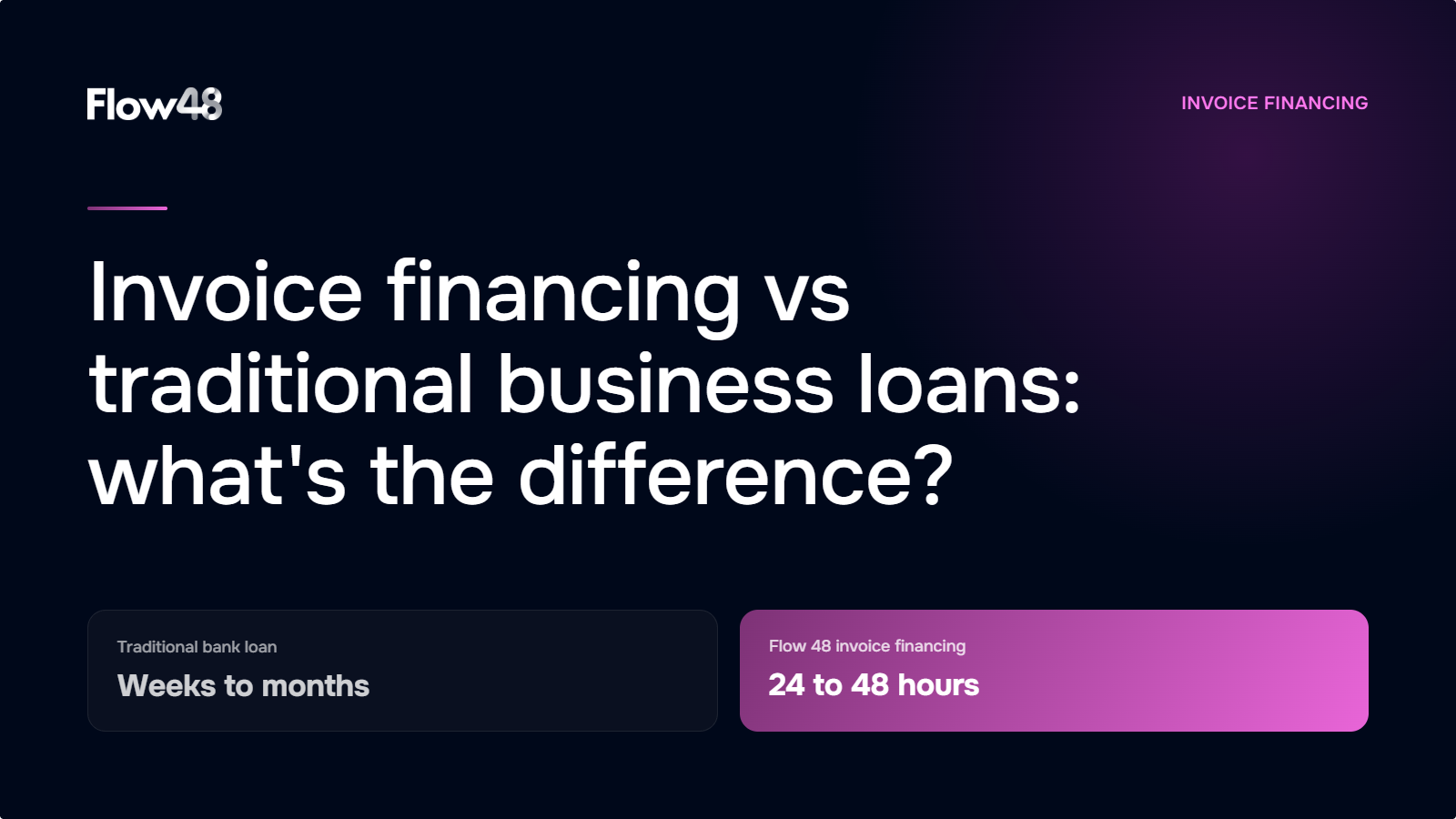
Traditional business loans can take weeks to approve and may require physical collateral. Discover how invoice financing offers eligible SMEs faster access to working capital tied up in unpaid invoices.
When a manufacturing business or professional services firm needs capital to grow, a traditional bank loan is often the first option considered. However, lengthy application processes, strict lending criteria and collateral requirements can delay funding, causing businesses to miss valuable growth opportunities.
Unlike traditional lending, invoice financing is designed to support your cash flow as your business grows. Flow48 helps South African SMEs unlock working capital tied up in unpaid invoices, giving them faster access to funding without the administrative burden of traditional business loans.
How Invoice Financing Approval Times Compare to Banks
Traditional financial institutions typically scrutinise your credit history closely, requiring extensive paperwork and lengthy risk assessments. As a result, approval can take anywhere from several weeks to a few months. OECD data show that strict banking requirements can limit SME growth worldwide.
When comparing your funding options, consider four key differences:
- Approval timelines can affect your ability to order stock, making a 48-hour digital process more practical than a multi-week bank assessment.
- Collateral demands from traditional institutions often tie up personal assets, while invoice financing uses your outstanding invoices as security for funding.
- Repayment schedules for traditional debt require fixed monthly instalments, while invoice financing aligns repayments with customer payments.
- Capital flexibility allows you to access funding only when a specific growth opportunity arises instead of paying interest on a large lump-sum loan.
Flow48 operates across the UAE, Saudi Arabia and South Africa, with a fully digital application process. Once your business meets the eligibility requirements and completes electronic enrolment, funds are typically available within 24 to 48 hours of approval.
The Risks and Requirements for Modern Funding
Traditional bank loans often require you to pledge personal assets or machinery as collateral. During slower trading periods, fixed repayments can place additional strain on your cash flow.
Understanding how invoice financing works helps business owners determine whether it is the right funding solution.
- Eligibility criteria: Businesses typically need R5m+ in annual revenue with at least 12 months of trading history to qualify for our facilities.
- Client concentration risk: If a significant proportion of your invoices comes from a single client, your funding limits may be adjusted to help manage risk.
- Repayment alignment: Repayments match your customer payments, helping protect your cash flow while allowing you to retain ownership of your business.
Invoice financing is designed to accommodate standard business billing cycles, providing cash upfront while you wait for customers to settle their invoices.
Frequently Asked Questions About Invoice Financing
Instead of fixed monthly instalments, repayments are aligned with the settlement of your outstanding invoices, subject to the agreed facility terms.
No. Invoice financing is a non-dilutive funding model, meaning business owners retain ownership of their company.
The facility can accommodate standard business billing cycles by providing eligible businesses with cash upfront while they wait for the customer to settle the invoice. The exact terms depend on the approved funding agreement.
Invoice financing allows a business to access working capital against eligible unpaid customer invoices instead of waiting for the customers to complete their usual payment cycles.
A traditional business loan generally provides a lump sum with fixed repayments and may require physical collateral. Invoice financing is linked to eligible outstanding invoices and repayments are generally aligned with customer settlements.
Subject to eligibility, verification and successful onboarding, approved businesses can typically receive funding within 24 to 48 hours after approval.
Invoice financing generally uses eligible outstanding invoices as the basis for funding rather than requiring property, machinery or other physical assets as collateral. All applications remain subject to assessment and terms.
Invoice financing may suit established businesses that sell to other businesses on credit terms and regularly wait 30, 60 or 90 days for invoice payments. Eligibility depends on factors such as revenue, trading history and customer quality.
Disclaimer: This article provides general information and does not constitute financial advice. Funding is subject to Flow48's credit assessment, eligibility requirements and applicable terms.
Access Working Capital Faster
Turn eligible unpaid invoices into working capital without waiting weeks for a traditional bank-loan decision.