Turn Your Future Revenue Into Working Capital Today
Flow48 helps South African SMEs access business funding through Revenue Based Financing and Invoice Financing, so you can ease cash flow pressure and fund growth without giving up equity or pledging collateral. Apply online and get funded in as little as 24–48 hours.
Fast approvals • No collateral required • No equity dilution
Now
No funding
Your future revenue
Our Mission
At Flow48, our mission is to help South African SMEs grow by turning future revenue into funding they can use today. We understand that steady cash flow is often the biggest barrier standing between a good business and its next opportunity — whether that's fulfilling a large order, managing seasonal dips, or simply keeping operations running smoothly. That's why we offer a flexible, alternative business funding solution that adapts to how your business actually operates, rather than forcing you into rigid loan terms. No collateral, no equity given up — just working capital, on your terms, when you need it most.
Introducing Flow48
Watch a quick overview of how Flow48 works, from application to funding. In just a few minutes, you'll see how South African SMEs use Revenue Based Financing and Invoice Financing to unlock working capital, ease cash flow pressure, and fund growth — without collateral or giving up equity.
Our Products
Invoice Based Financing
Turn unpaid invoices into immediate cash flow. If your business is waiting 30, 60, or 90 days for customers to pay, invoice financing lets you access those funds sooner — so slow-paying customers no longer hold your business back.
Revenue Based Financing
Access working capital based on your business's future revenue, not your balance sheet. Ideal for businesses with steady, recurring income, revenue based financing funds stock, staff, or growth opportunities — with repayments that flex in line with your revenue.
Why Flow 48
More South African SMEs are choosing Flow48 over traditional lenders. Where banks can take weeks to approve funding and demand extensive collateral, we've built a faster, more flexible process designed around how growing businesses actually operate — with a transparent process from application to funding, structured around your business, not the other way around.
Fast
Electronic enrollment and approval
Funding within 24-48 hours
Flexible
Access capital only when you need it
Repayment schedules to fit your business
Balance Sheet Friendly
No need to give up equity
No need to pledge collateral
How it works
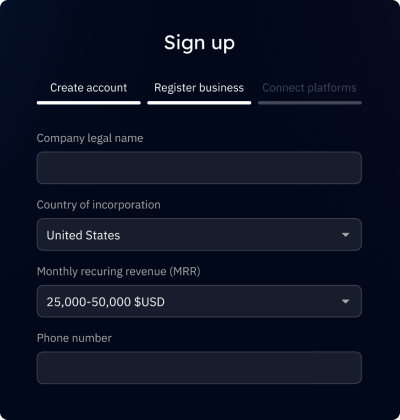
1
Create an account
Sign up online in minutes with your basic business details — no paperwork, no branch visits, just a simple digital application to get started.
2
Register business
Add your business and banking information so we can verify your business and assess your eligibility for funding.
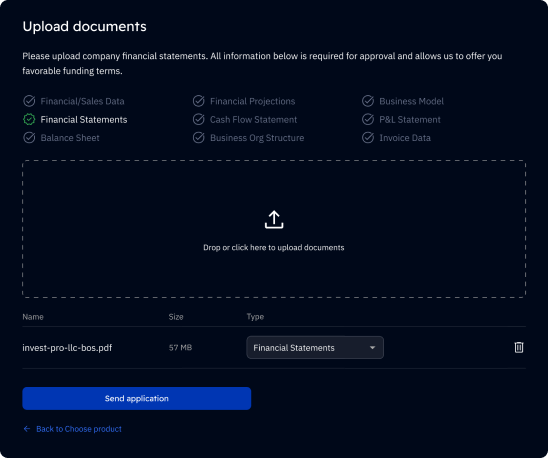
3
Upload documents
Securely upload your recent bank statements, invoices, or revenue records — whatever is relevant to the funding option you have chosen.
4
Select offer
Review your personalised funding offer, including the amount, terms, and repayment schedule, and accept the option that works best for your business.
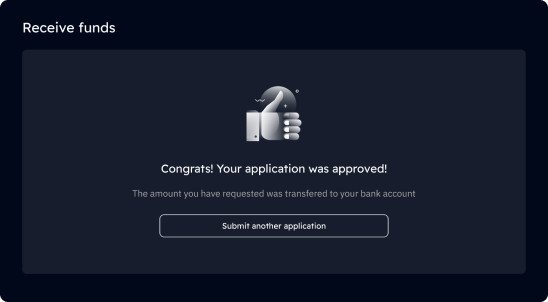
5
Receive money
Once you accept your offer, funds are paid directly into your business account — typically within 24 to 48 hours.


Compare Flow48 with traditional finance
Traditional financing wasn't built with fast-moving SMEs in mind. Bank loans often mean rigid repayment terms, mountains of paperwork, and collateral most growing businesses can't spare — while equity investors expect a share of your business and a say in how it's run. Flow48 offers a different path: fast, transparent business funding based on your invoices or future revenue, with no collateral and no dilution, so you keep control while your business keeps moving.
Debt
Requires collateral
Strict covenants
Expensive upfront and hidden fees
Administrative burden
Early payment penalties
High lending rates

Instant access to funding
Fast and simple enrollment
Non-dilutive
No collateral required
Flexible repayments
Transparent fees
Tailored to SME needs
Equity
Dilutive
Lose control over decision making
Expensive capital
Long due diligence period
Monthly reporting requirements
Restricted use of funds